Cold, dark, and boring
The bedroom setup that does half the work, and what's actually worth spending money on.
Once light is handled, the room itself is the next lever. The good news is that the useful changes are cheap and the expensive ones are mostly optional.
Temperature
Your core temperature has to fall for sleep to begin, and a warm room makes that harder. Somewhere between 16 and 19 degrees suits most people, which is cooler than most bedrooms.
A warm shower an hour before bed helps, counterintuitively: it moves blood to the skin, and the subsequent drop is steeper than if you’d done nothing.
If your feet are cold you’ll struggle to fall asleep regardless of room temperature. Socks are a legitimate intervention and nobody will know.
Darkness
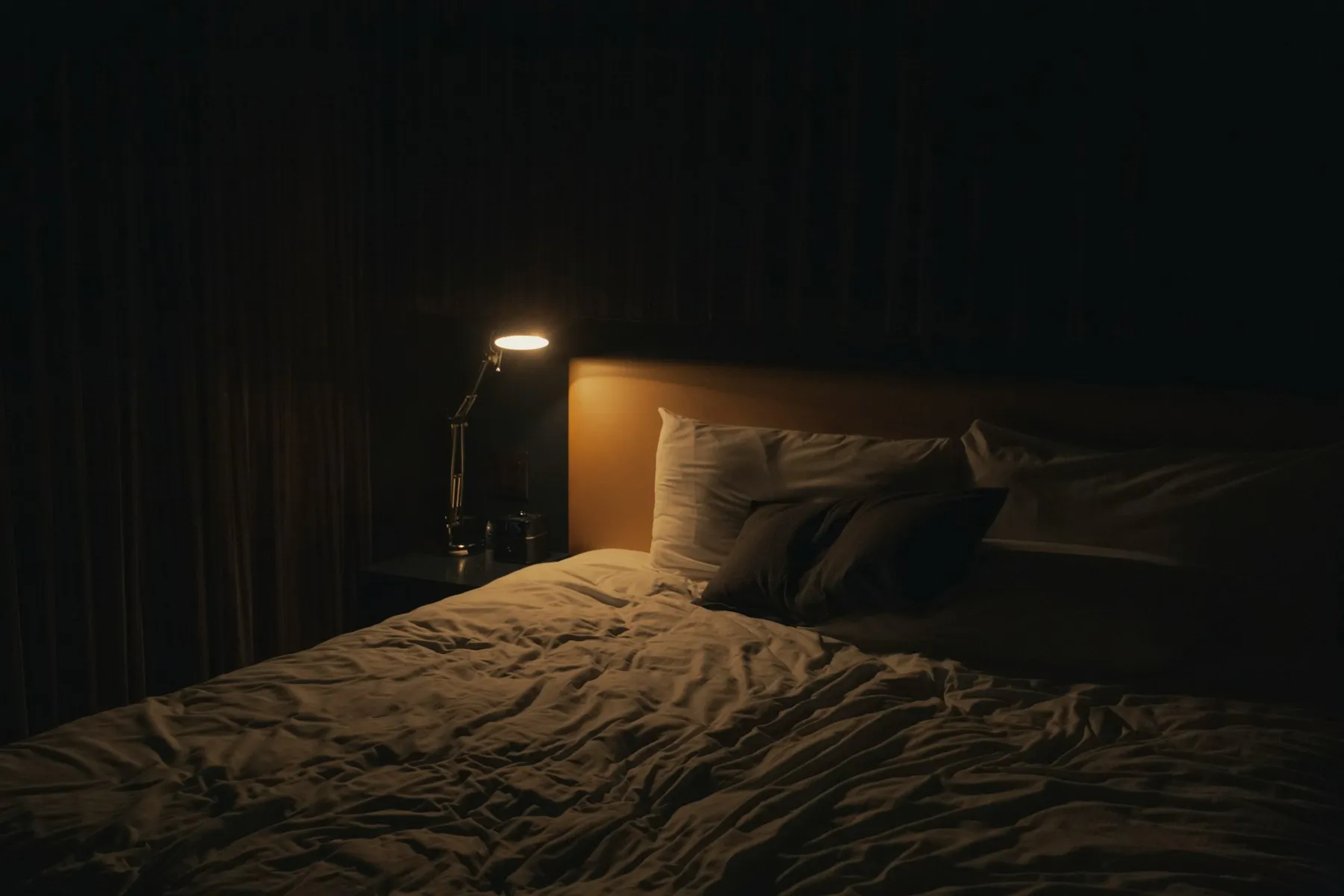
Properly dark, not curtain-dark. Even modest light through the eyelids affects sleep depth. Blackout curtains are the good version; a cheap eye mask is the ninety-percent-of-the-way version and travels well.
Deal with the small lights too - standby LEDs, chargers, a bright clock. A strip of tape solves most of them.
Sound
Consistency matters more than silence. A fan or a white-noise source that runs all night is usually better than a quiet room punctuated by a door or a car, because it’s the change in sound that wakes you rather than the level.
What to spend money on
| Spend on | Roughly | Worth it? |
|---|---|---|
| Eye mask | £5 | Yes, and buy one for the suitcase |
| Tape over standby LEDs | £0 | Yes |
| Blackout curtains | ££ | Yes, if the room faces a streetlight |
| A fan or white noise | £ | Yes, if your street is unpredictable |
| A thermostat you control | ££ | Yes |
| A new mattress | £££ | Only if yours is uncomfortable or ancient |
| ”Sleep-optimised” bedding | ££ | No |
| An air purifier for sleep | ££ | No |
| Anything with an app | ££ | No - see lesson five |
What not to bother with
Air purifiers marketed for sleep, most “sleep-optimised” bedding, and anything with an app. None of them are harmful; none of them beat a dark, cool room.
16 degrees sounds freezing.
It is the room, not you. A cool room with a warm duvet is the combination - the aim is to let heat leave your skin, not to be cold under the covers.
I share a bed with someone who likes it warm.
Separate duvets solve most of this argument, and are standard across much of Europe for exactly this reason. Failing that, split the difference and take the socks.
Resources
Bedroom setup checklistWalk the room once with this, tick what is already right, fix the rest.DownloadProgress is saved to your account.
This lesson is part of the full course
Enroll once and own it forever - every lesson, the quiz, and all future updates to Sleep You Can Count On.
Or get every course with the All-Access Pass - $149 once.
Already enrolled? Check your account.